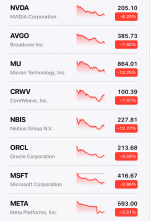
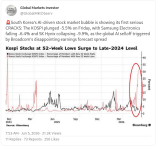
The markets are just waking up in New York, and while it isn’t an instant, apocalyptic zeros-across-the-board collapse, the pain is actively transferring directly over from Friday's carnage.
If you look at the global board right now, the dominoes are falling exactly in order as the time zones wake up.
1. The Pre-Market & Asian Cascades
The "weekend effect" did exactly what we thought it would do. Institutional fund managers and retail investors spent 48 hours letting the anxiety marinate, and the selling started overseas long before the US opening bell:
- Japan’s Nikkei 225 absolutely cratered this morning, closing down a massive 4.08%.
- Indonesia's exchange plummeted over 4.2%.
- Europe followed suit, with the major indexes opening firmly in the red as global risk appetite completely dried up over the weekend.
2. The US Opening Reality Check
As the US pre-market trading wrapped up and the opening bell rang, the tech-heavy Nasdaq didn't find some magical safety net over the weekend. Friday's massive 4.2% drop set a brutal floor.
The hardware giants are holding right at those damaged levels or slipping further into the red. Investors are facing a cold reality check:
- Nvidia is hovering right around that $205 mark, down over 6% from its highs, desperately trying to defend its valuation.
- Broadcom is feeling the heaviest weight of that downgraded growth outlook, sitting down roughly 12% to 13% from its peak last week.
- AMD and Intel both shed around 11% in this wave, showing that the market is no longer treating the semiconductor sector as an untouchable, infinite-money printer.
Why it looks like a "Leak" instead of an "Explosion"
A true structural collapse rarely happens in a single, clean 9:30 AM drop on a Monday. What we are seeing right now is a
liquidity and rotation squeeze. Institutional money is actively fleeing high-multiple tech growth stocks and aggressively dumping them into boring, defensive sectors like healthcare, consumer staples, and utilities.
They are essentially moving their chips off the table before the next round of inflation and corporate earnings data drops. If the tech giants can't prove in their upcoming quarterly reports that regular businesses are spending real money on these AI tools, the funding loop will snap, the orders for these $30,000 GPUs will dry up, and the floor will drop significantly lower.
The frenzy has definitively broken. The days of "buy anything with AI in the name" are done, and the hardware market is finally getting its first major dose of gravity. Let's see how the afternoon volume holds up.




 www.tomshardware.com